The AI decides, the server gets it right
Reading the question, comparing and recommending are left to the AI. The server owns one thing: UR data that is complete and exact, with tool descriptions that tell the AI how to show it.
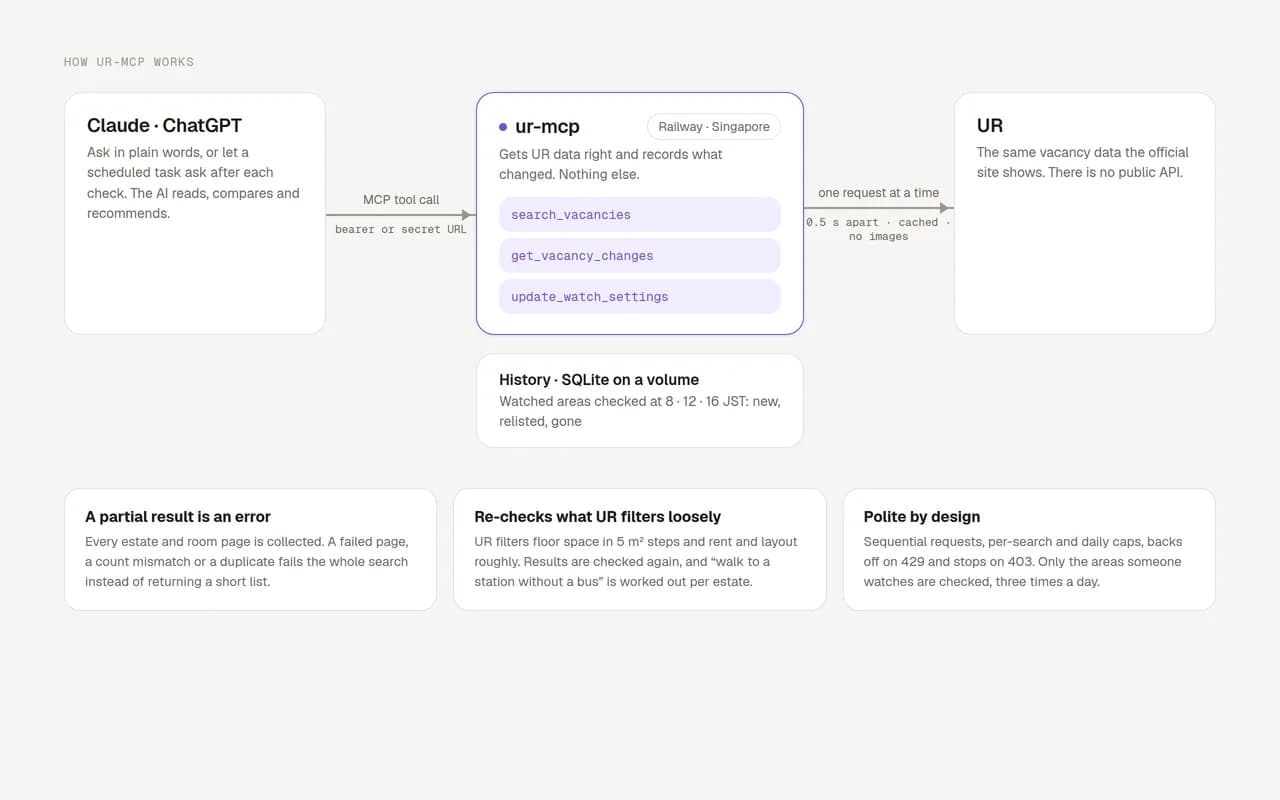
UR has no public API. ur-mcp takes the same data the official site shows for vacancies and hands it to AI agents as three MCP tools: search vacancies, report what changed, save watch settings. Requests go one at a time and skip images, about the load of one person viewing a results page.
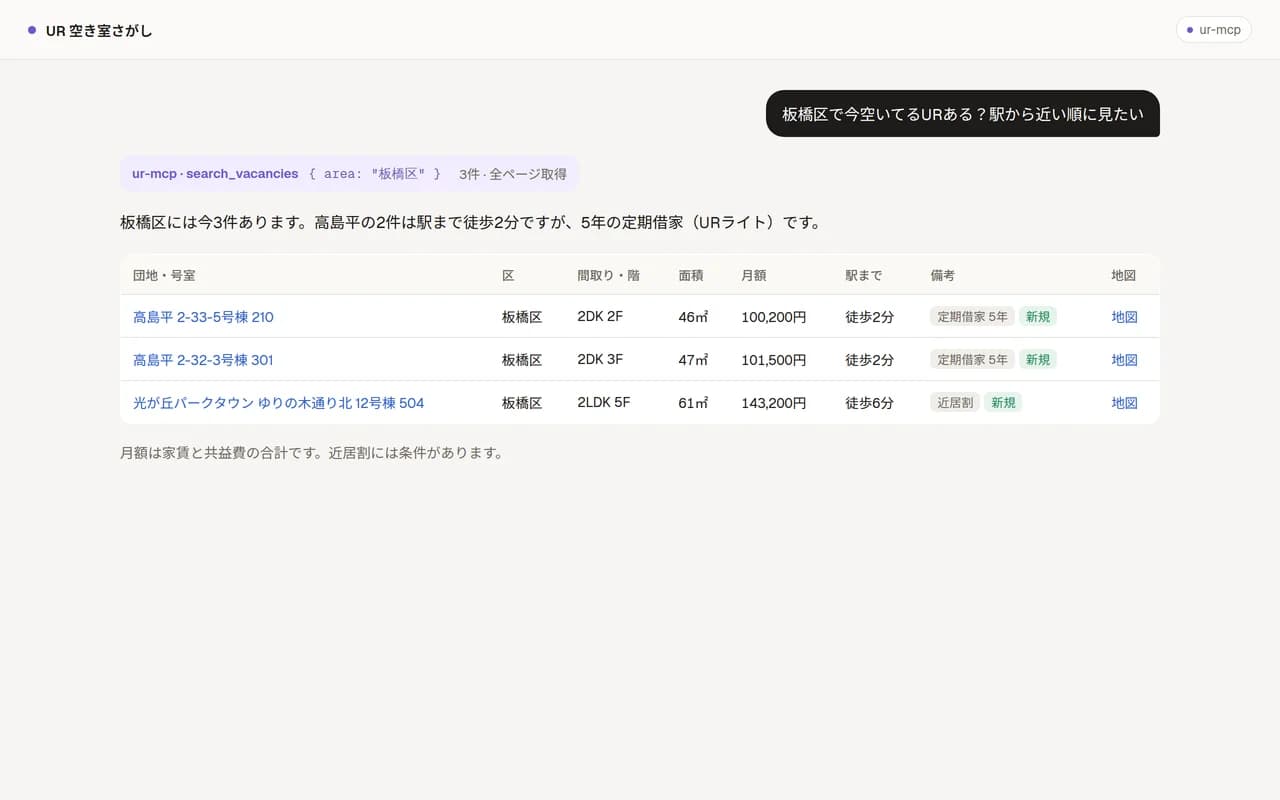
After building UR check, I caught myself still asking an AI about rooms. AI assistants now have notifications and scheduled tasks of their own, and they're far better than my screens at talking a choice through. So why not just hand the AI accurate data and let it do the rest? That's where ur-mcp came from.
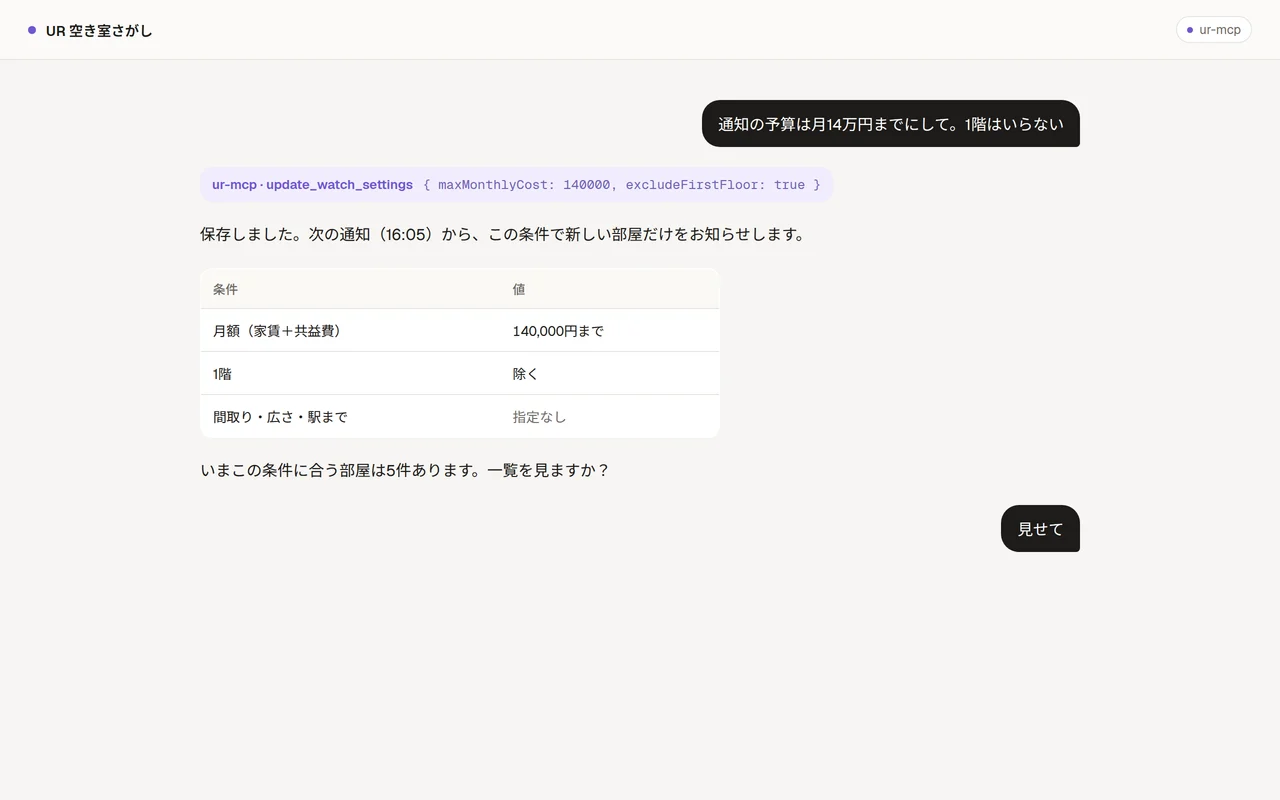
A skill would have been the simple route, but UR's data has gaps and needs cleaning up, so I built an MCP server. Ask Claude or ChatGPT for a 2DK near a station in 板橋区, it calls ur-mcp, and the rooms come back as a table with links to each listing and a map. Alerts come from a claude.ai scheduled task that asks for changes right after each check.
It's an amazing time. Without building notifications, a scheduler or a login, one MCP server with the right data gets better answers than the scraped results I used to show. It shares no code with UR check, and it's used by me and a few people I've given a private link to.
Reading the question, comparing and recommending are left to the AI. The server owns one thing: UR data that is complete and exact, with tool descriptions that tell the AI how to show it.
Every estate and room page is collected. A failed page or a count mismatch fails the whole search. What UR filters loosely — floor space, rent, layout — is checked again.
claude.ai and ChatGPT connectors can't send a bearer token, so each person gets a URL. Tokens are compared as SHA-256 digests in constant time; cutting someone off is one variable.
One request at a time, 0.5 s apart, with a 5-minute cache and daily caps. Searching 町田市 makes the same 7 API calls as opening the official results page, minus its ~30 images. It backs off on 429 and stops on 403.
Not affiliated with UR (Urban Renaissance Agency). Always confirm availability on the official UR site. The images are drawn from real ur-mcp results.